Showing posts with label family history vintagefamilyphotographs. Show all posts

Thursday, July 25, 2024

FAMILY HISTORY: Carte de Viste and Cabinet Card Photographs

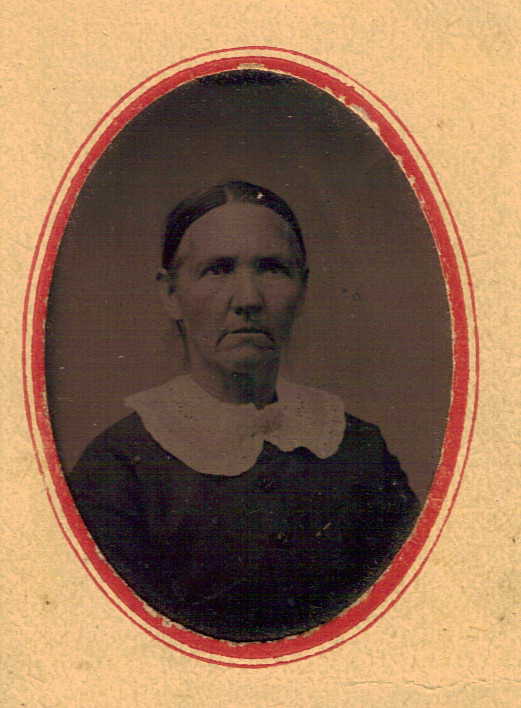
 Carte de Viste and Cabinet Cards are two types of easily recognizable photographs dating from the Victorian era or about the mid-19th century to the early 20th century. 

            The carte de visite (CdV) photographs are the size of calling cards, measuring 2 1/2 x 4 inches. Because of their size, a series of photographs could be produced on paper and cut into eight cards. The size may vary, however, because commercial suppliers began mass-producing cards, and the images had to be trimmed to fit the card size. Many were careless in their trimming, so you may run across some CdVs that are angled or otherwise varied. 

       
           Many people who went calling on their relatives or neighbors would leave their carte de vistes upon leaving. The pictures became popular in the 1860s, and royalty, politicians, actors, and other famous individuals had their images made into these photographs and signed them. The Victorians prized carte de visite photographs and collected them. 


            These photographs were famous during the Civil War. President Lincoln and Ulysses S. Grant had their photos taken this way. Albums were made to accommodate people’s collections and hold the prized cards. It would be fortunate for someone to have an album full of these beautiful Victorian treasures among their family photograph collection!  


            To identify a carte de viste, first measure the size of the photograph. The paper print will be mounted on a commercially produced card. Look closely at the subject in the picture and notice the hairstyles and clothing. Carte de vistes were produced into the very early 1900s. These small prints may appear very faded and grainy.  

            Cabinet cards replaced the carte de vistes. They can measure from small, 5 inches x 7 inches, to larger ones, 5 inches x 10 inches. A customary cabinet card is a photo mounted onto thicker card stock. There is extra space around the photo; you will find the photographer’s studio imprint (if there is one), usually at the bottom. These are albumen images and will have a yellow-brown or purple-blue tone. But sometimes, they may appear black and white. That is due to the process in which they were developed. The last cabinet cards were produced around 1925.

            These photographs were named because Victorians displayed them in their parlors, especially in cabinets. The cabinet card was an admired type of photograph that displayed family groups. By this time, photographers began to use props or complex scenes in studios, using ironwork chairs, gates and fences, fake trees and grass, or ornately constructed window and doorway sets. 

            To identify cabinet cards, note their measurements and observe the color of the paper image. Note if they have gilt and embossed decorative borders and an imprint giving the photographer’s name & the location of the studio. If the card stock separates layers on the edges, they were probably made after 1870. 

            The Victorians treasured all things, especially their clothing and jewelry. Cabinet cards document their love of the elaborate. Children’s pictures may show them poised with their dolls, toys, bicycles, and wagons. Look for women in fanciful hats and gorgeous gowns and men with pocket watches, mustaches, and dapper clothing. 


            When Kodak introduced the Brownie Box Camera around 1900, cabinet card photographs declined in popularity.

            While researching these two types of photographs, I found a lot of conflicting information. Writers, photographers, and collectors disagree on the dates the carte de visite and cabinet card photographs were introduced and how they were produced. 

            I love these types of photographs, and in my collection, there are cabinet card photos of babies, children posed with their pets, men sitting beside their faithful dog, women in giant hats, and family groups in various settings. Not all of them have the photography studio imprint. 

            If you visit flea markets and antique stores and run around to community garage sales, you will probably find old photographs displayed in baskets and trays on shelves of other collectible treasures.

Friday, March 1, 2024

WOMENS HISTORY MONTH: Emma Faye Laney

 You know those 1950s girls who wore Bobby Sock-wearing sweaters, saddle shoes, and peanuts in their Coca-Cola and who wanted "fun" to be their middle name? Those girls who wore their hair snipped in bobs or in a swinging ponytail made a fashion statement for sure! My mother was one of those girls. And she favored shorter hairstyles.

 Emma Faye Laney, born on the family farm near Laney Ridge Road in Barry County, Missouri, was the third daughter of Charley and Belvia (Ross) Laney. Charley worked for the Works Progress Administration on road projects. He was killed in August 1947 when a hay truck hit the car he rode in. Mom was nine years old. She forever grieved her father.

 Mom told me he teased her in a sing-song voice, “MFA, MFA.” Her name, Emma Faye, resembled the name of the Missouri Farmers Association (MFA), founded in 1914 and serving Missouri agricultural communities. In all the area’s small towns, the MFA store served everyone. When her dad teased her, she would cry, and he would swing her up into his arms and snuggle the tears away.


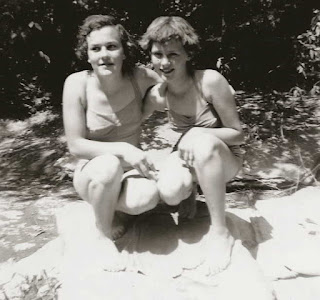
 Belvia, Mom’s mother, remarried in September 1949. The children were dispersed to adoptive homes. But Mom went to live with her aunt. In 1951, she became the foster daughter of Dr. and Mrs. James Holmes and their daughter, Sandra. Sandra was overcome with happiness to have a sister! Mom and Sandra were best friends, continuing their friendship into adulthood. The Holmes family was beloved in their community. James L. Holmes was a local doctor, and Mrs. Holmes was the model wife. Mom was proud to be part of their family. This is a photo of Mom and Sandra Holmes.

 School days consisted of Mom's favorite studies: Home Economics and Art Class. She was a High School cheerleader. She and her friends were typical 1950s teenagers who loved listening to the radio, parties, and running around small-town America. They wore their lipstick in outrageous reds and shiny nail polish to match. Their rouge pots held perfectly pink blush. One thing is for sure, my mother rocked her lipstick. I have many photographs of her and her friends in their zany, wild, wonderful teenage days.


During each Halloween, the local downtown businesses participated in storefront window painting. The high school kids worked in groups to paint the windows. Prizes were awarded to the best-dressed windows. Mom and her group of painters won multiple times each year. Halloween celebrations included a street dance, a carnival, games, and food galore.


 At the 1953 Halloween Street dance, Mom met Ronnie Utter, and sparks flew. It was love at first sight. They married that December at a local church. They made their home in the neighboring town where Ronnie's folks lived. I was the first-born child and the only girl. They had three more children, all boys.

An unfortunate event occurred in 1960. Dad asked for a divorce. Like a slap in the face, his request hit Mom hard, and she fought it. She was pregnant, and the baby was due in October. The court made them wait until after the baby was born. And to her remorse, several months later, the divorce was final. He got what he wanted. Dad worked in construction, and at that time, the oil and gas pipeline and road district projects were abundant in our nation. He married the woman, and they had two children.

Mom remained at home, living with Dad's grandmother, Ollie. Mom was a twenty-four-year-old divorced woman with four young children. In the 1960s, people frowned on women in that category. Life was indeed hard during that time.

 My mother remarried Frank Bartkoski in 1961 and moved back to her hometown. A few years later, they had one son. Mom was the model housewife of the 1960s. She kept a tidy house, and she cooked scrumptious meals. She helped the other mothers at the elementary school. She was a good seamstress and she sewed and sold homemade Barbie Doll clothes. During the elementary school programs and events, she sewed costumes and volunteered her time doing whatever was needed. In later years, she worked as an Avon lady. I remember her Avon samples and products were stored in a pink hardshell case. My brothers and I loved opening that little case. Avon cosmetics were tucked inside, their colors and fragrances tempting us like hard candy at Christmas. 

Throughout the years, Mom stayed in touch with her family, especially her brothers and sisters. Through the years, she organized reunions and get-togethers. Her mother and brothers and sisters were always welcome at our house, and we visited them often in their homes. We grew up with our cousins, and memories were definitely made.

 During summers, my brothers played Little League baseball. We attended all the games. Each Sunday, we were in church. I was a Girl Scout, and my brothers were Boy Scouts.

 Gardening was a unique talent for Mom. She exercised her green thumb, and the garden was alive with all varieties of vegetables. A long row of glorious Zinnias and Marigolds divided the garden. She told us the flowers kept the bugs away from the veggies. Of course, she was right.

 The bounty from the vegetable garden was stored in glass Ball canning jars. The kitchen was a hot mess with Mom and her canning adventures each summer. One year, she had so many Rutgers tomatoes that she learned to make homemade ketchup. The ketchup was delicious, but she never made it again as it took bunches of tomatoes, and processing those tomatoes was a vast and exhaustive chore. Mom loved making blackberry and strawberry jam and jelly.

 I was her sidekick. Where she was, I was. Whatever she attempted, I was beside her learning. She taught me all the secrets to keeping a house clean, washing laundry, hanging laundry on the clotheslines, ironing (sprinkling the clothes and rolling them tight), and cooking and canning.

Mom and Frank divorced in 1971. She found an excellent job working as a Line Supervisor at a poultry plant in another small town. She was loved by her line workers, and she stood beside them, doing as much work as they did. During that time, she bought her first home and embraced life. She never married again.

 Unfortunately, Mom suffered debilitating strokes, which led to early retirement and adapting to the new way of life. The last stroke ended her freedom of living alone. The doctors insisted that she be monitored day and night. She lived in the nursing home until she died in 2013. 

 Through the happiness and hardships of life, Emma Faye Laney never gave up. She stood for her beliefs and taught her children how to live right. I am my mother's daughter. She made me strong and industrious, learning to survive in the world. I celebrate my mother this month during Women's History Month.

  Emma Faye Laney was a fun-loving Fifties Girl.


Friday, January 12, 2024

FAMILY HISTORY: Traveling Photographers and Photography Studios

 Traveling Photographers and Photography Studios

Cameras help us remember our ancestors and history. To look upon a photograph is to experience the past, whether it was only yesterday or hundreds of years ago. Taking photos today is preserving the past, for tomorrow will come and yesterday will be history.

 In the last half of the nineteenth century, the development and increasing recognition of the art of photography rose to popular demand. As the techniques of photography became less cumbersome, transporting equipment became more practical. Photographers opened their own galleries or studios in towns, while some loaded their horse-drawn wagons and hit the road as traveling photographers.

 In the early days of traveling photographers, they documented scenes of everyday life as well as historical monuments and places. They sold their pictures to tourists who collected them as souvenirs of their travels. Many were photojournalists scouring the nation’s countryside searching for those interesting and important daily life images. Here are photos of my 2nd great-grandparents, David Jefferson and Christina (Hunt) Utter: 

       
Traveling photographers used many modes of transportation to get from one place to another. Some used ponies, horses, and mules to haul the camera and equipment while he walked throughout neighborhoods offering to take pictures of anyone interested. A woman recounts that her mother used a photographer and his pony when he came by their home. The man set up his equipment, sat the little girl atop the pony, and posed the pony in an appealing position, snapping the photo. It was a cherished and prized photograph. These photos are of Elijah Burton and his first wife, Mary Jane and the second is of Elijah with his second wife, Mary Magdalene.  Note the difference in the backgrounds of the photos.  


L.E. Deubler used a bicycle to carry his camera and equipment, riding throughout Oklahoma, New Mexico, and Texas in the early 1900s. Charles Allonby, born in England, came to the United States in 1900. He was one of the early photojournalists who was hired to travel the states finding interesting people to write about and taking photos to accompany the stories. He lived in several states before coming to Neosho, Missouri. Allonby photographed many of my family’s reunions that were held at the Big Spring Park, in Neosho. 

Fields Photography was once a leading photographer who, for many years, traveled the Ozarks taking photos of many places, events, and people. Fred Fields and his wife and son grew their business in Cassville, Missouri. Upon their deaths, the Fields Photo Archives is now housed in the Barry County Museum in Cassville. Visitors to the archives can search the files of negatives, and then order those long-gone photos. Here's one of my family line, taken at Fields Photo Shop: 


Victorian photography studios, or galleries, were a popular place to visit. From my family photo collection, I know there were many such studios in our area. Due to prolonged exposure times, photographers used special props to help keep their subjects still while sitting and waiting. 


These two photos have the same background images with more or less props. They are of the same family line, Elijah B. Utter. 

Look at your photographs and the background of them, especially those that are vintage. Many times, the backdrop features a painted outdoor scene, draperies with a window, or other interesting backdrop. Some of the Victorian photographs I own are from the Paris Art Studio and H.D. McMahan, a traveling photographer in Cassville, Missouri. Other photos are imprinted with the names of the Sims Art Studio in the Opera House block in Monett, Missouri, and the Fogel Postal Studio of Joplin, Missouri.


The above photo has the studio imprint at the bottom of it. It's a gorgeous print! Imprints can be found usually on the front side of photos, but at other times will have it on the back. Sometimes the photo card will have the studio’s advertisement specializing in all kinds of portraiture in crayon, ink, oil, or watercolors.  Here are a few more from my collection: 


Today, some photographers travel to schools and organizations. At one of our family reunions, we used a local photographer who took beloved photos of everyone gathered together. Travel photographers enjoy their career scouring the world capturing gorgeous photographs of land, animals, and people, and publishing them in magazines and other media.  

 I am fortunate to own many antique and vintage photos! In many of the pictures, I wonder if a traveling photographer snapped them. Because of the nature of the photo with the people and their location, they may have been used in various magazines and journals across the country. Many of my relatives owned cameras and patronized the local photography studios. Here are a few that show the studio’s information imprinted on the picture. My beautiful families sat for portraits with their children and their beloved pets. I’m forever grateful that they did.


Monday, November 27, 2023

FAMILY HISTORY: Cherish Your Family Stories

 Since the beginning of time, the harvest has been a season of gathering crops from the fields and getting together with family and friends to celebrate. There are other things to gather this time of year besides our produce. With the holidays approaching and while you are preparing for family gatherings, swing your thoughts to your family history.   

Gathering family stories can be a fun and tantalizing activity. Collecting those tales from yesteryear (or even not so long ago) is something you will treasure. Letters, photos, and cards are pieces of memorabilia that enrich your family history.

Many folks write holiday family letters, happily chattering about their year. These letters are full of family information, so keep them with your research. One winter, my cousin blessed me with a batch of her old family keepsakes. In the collection of goodies were several letters written when a family member passed. One of the sisters included news from their hometown in Indiana and included at great length news of a friend’s wedding. What an endearing historical artifact for me. Here is the first page of the four-page letter my cousin gave to me: 


When you have old letters and photos, use the who, what, when, where, why, and how questions to document the details. When you read cards and letters, pay attention to the writer’s handwriting and their way of communication and spelling.

Here is the front page of the letter my 3rd great-grandfather wrote to his children after his beloved wife died. He spells the word 'much' as 'mutch' and 'which' as 'witch.'

If you send holiday cards, explain to your family about your interest in family history and genealogy. Ask them if they can supply answers to missing information and if they have pictures they will share. Share some of your family history information with them. You may be surprised at what you will get in return. 

Another suggestion for your get-togethers, ask your guests to bring a few family photos and the stories that go along with them to share with everyone. Don’t forget to ask questions and write the answers down so you’ll have details later. Think of it as an informal interview.

If you’re seriously savvy, use a recorder to capture every word and phrase of the stories you hear. If you know Great-grandma or Uncle Henry will grace your gathering, write your questions on paper so you won’t forget to ask her during the excitement of the day.

Here’s a neat tip about sharing photos with everyone. To prevent smudging the photos, place them in archival-safe sleeves. If you don’t know who the people are in any of your photographs, consider assigning a number to each photo. If anyone recognizes the people, places, events, and dates, you can easily write that information on your paper with the assigned photograph number. 

One last suggestion about vintage (actually all) photographs: never write on the backs of them. If you absolutely must, use a pencil.  If you use an ink pen over time the ink will bleed through onto the fronts of the pictures ruining them.

Not only during the holidays but at every gathering, enjoy the opportunities to discover your family history.