Showing posts with label family history photographs. Show all posts

Thursday, July 25, 2024

FAMILY HISTORY: Carte de Viste and Cabinet Card Photographs

 Carte de Viste and Cabinet Cards are two types of easily recognizable photographs dating from the Victorian era or about the mid-19th century to the early 20th century. 

            The carte de visite (CdV) photographs are the size of calling cards, measuring 2 1/2 x 4 inches. Because of their size, a series of photographs could be produced on paper and cut into eight cards. The size may vary, however, because commercial suppliers began mass-producing cards, and the images had to be trimmed to fit the card size. Many were careless in their trimming, so you may run across some CdVs that are angled or otherwise varied. 

       
           Many people who went calling on their relatives or neighbors would leave their carte de vistes upon leaving. The pictures became popular in the 1860s, and royalty, politicians, actors, and other famous individuals had their images made into these photographs and signed them. The Victorians prized carte de visite photographs and collected them. 


            These photographs were famous during the Civil War. President Lincoln and Ulysses S. Grant had their photos taken this way. Albums were made to accommodate people’s collections and hold the prized cards. It would be fortunate for someone to have an album full of these beautiful Victorian treasures among their family photograph collection!  


            To identify a carte de viste, first measure the size of the photograph. The paper print will be mounted on a commercially produced card. Look closely at the subject in the picture and notice the hairstyles and clothing. Carte de vistes were produced into the very early 1900s. These small prints may appear very faded and grainy.  

            Cabinet cards replaced the carte de vistes. They can measure from small, 5 inches x 7 inches, to larger ones, 5 inches x 10 inches. A customary cabinet card is a photo mounted onto thicker card stock. There is extra space around the photo; you will find the photographer’s studio imprint (if there is one), usually at the bottom. These are albumen images and will have a yellow-brown or purple-blue tone. But sometimes, they may appear black and white. That is due to the process in which they were developed. The last cabinet cards were produced around 1925.

            These photographs were named because Victorians displayed them in their parlors, especially in cabinets. The cabinet card was an admired type of photograph that displayed family groups. By this time, photographers began to use props or complex scenes in studios, using ironwork chairs, gates and fences, fake trees and grass, or ornately constructed window and doorway sets. 

            To identify cabinet cards, note their measurements and observe the color of the paper image. Note if they have gilt and embossed decorative borders and an imprint giving the photographer’s name & the location of the studio. If the card stock separates layers on the edges, they were probably made after 1870. 

            The Victorians treasured all things, especially their clothing and jewelry. Cabinet cards document their love of the elaborate. Children’s pictures may show them poised with their dolls, toys, bicycles, and wagons. Look for women in fanciful hats and gorgeous gowns and men with pocket watches, mustaches, and dapper clothing. 


            When Kodak introduced the Brownie Box Camera around 1900, cabinet card photographs declined in popularity.

            While researching these two types of photographs, I found a lot of conflicting information. Writers, photographers, and collectors disagree on the dates the carte de visite and cabinet card photographs were introduced and how they were produced. 

            I love these types of photographs, and in my collection, there are cabinet card photos of babies, children posed with their pets, men sitting beside their faithful dog, women in giant hats, and family groups in various settings. Not all of them have the photography studio imprint. 

            If you visit flea markets and antique stores and run around to community garage sales, you will probably find old photographs displayed in baskets and trays on shelves of other collectible treasures.

Tuesday, July 23, 2024

FAMILY HISTORY: Types of Photographs ~

When you look at a family photograph collection, you may see all types of pictures: tintypes, paper prints, case images, Polaroids, black-and-white, color, and digitalized. Over the years, types of photographs have come and gone quickly, which is why there is a good market for buying, selling, and collecting photographs today. Here is an overview of the types of photographs. 

NOTE: all photographs are from the author's collection. They are not in any order, I randomly placed them within this blog post.

Daguerreotypes were made from about 1839 to 1870. The sitting time for these photographs could be five to 30 minutes. Photographers sometimes used clamps to help their subjects sit still. 

 Calotypes were the first paper images from about 1841 to the late 1850s. These photos were not very popular, and the ones that survive today are usually found in museums. 

 Ambrotypes were negative images made on glass plates with a dark coating on the backs. They lasted from about 1852 to the early 1870s. 

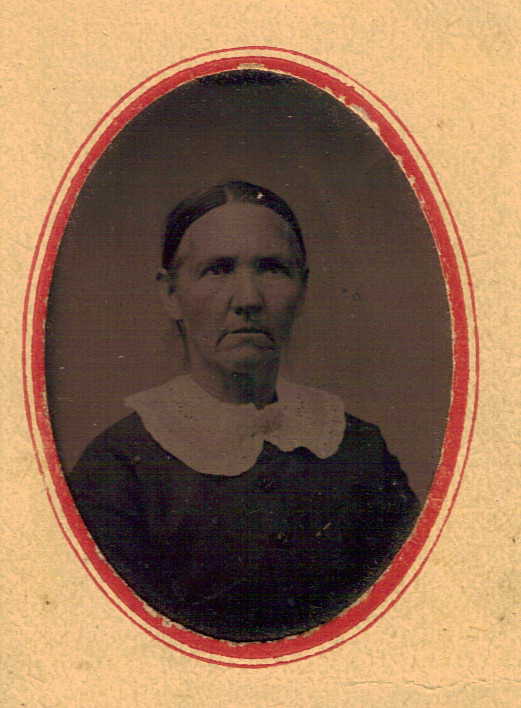
 Tintypes, also called ferrotypes or melainotypes, were created on a thin, blackened iron sheet, then coated with chemicals and varnished to protect the image. In a future column, I will cover much more information about the popular tintype photographs.  

This is a tintype of my great, great-grandfather.

From 1850 to the early 1900s, Albumen prints, which were also printed on paper, helped make photography profitable. 

Stereographs were prints of nearly identical images mounted beside each other and viewed through a viewer called a stereograph. They were popular from about 1854 to 1938.         

Cabinet card photographs were made from about 1866 to 1906. The photographic images were put on large, oversized card stock. I have quite a few of these cabinet cards in my collection.

A cabinet card; the photographer was a traveling photographer; his imprint is at bottom of photo.

Another cabinet card with the same traveling photographer's imprint.

George Eastman founded the new age of photography with black-and-white snapshots. From the late 1880s to the present, these prints were taken with box cameras that were easy to use. Eastman named his new camera Kodak, and the company’s promotion was geared specifically to women and children. 

 Photo postcards are a particular class to me. I own a precious photo postcard dated February 1912. The photo shows my paternal great-grandmother, 17, holding her son, my grandfather, Perry Utter. On the postcard side, she wrote to her younger sister in Rocky Comfort. There is a lot of information about photo postcards, which I will write about in a future column. 

An original photo postcard, circa 1912; author's great-grandmother with her son, my grandfather. 

Autochrome photographs were the first color prints dating from 1904 to the later 1930s. There are special handling tips for owners of these types of prints. 

Color paper prints are well known today. The Kodak Company introduced Kodachrome 16mm movie film in 1935 and color prints with negatives in 1941. However, the popularity of Digital Imaging in today’s market ended the manufacture of Kodachrome film. 

Author's photo, Leaving Kansas, circa 1910.

My grt, grt grandfather's family cornet band, circa 1900. 

From 1947 to the present, an instant photo is recognizable due to its thick black pouch-like backing. Polaroids became popular because consumers could snap a picture and wait for a few seconds while the photo developed inside the camera, not needing to take the film to the store for development. Special care is necessary for these types of photos. 

Today, digital cameras are a popular way for photographers to take family photos. Digital imaging goes along with scrapbooking-treasured pictures for fun and easy creative projects. While many people embrace digital cameras, the cameras requiring film continue to be popular.

Sources: 

“Photography as a Tool in Genealogy,” by Ron and Maureen Taylor and “Getting Up To Date,” Family Tree Magazine, Volume 11, Issue 7, November 2010. 


Thursday, February 29, 2024

FAMILY HISTORY: Creating A Photographic Timeline For Your Ancestors

 The old saying, "A picture is worth a thousand words," is quite true. And I am so lucky to own many family photographs. I have carefully preserved them in archival-safe clear sleeves and put them in albums. And I scanned all of them into online resources. But an exciting way to use your pictures is to compile a timeline to illustrate people's life stories.

It's part detective work and pure enlightening! Here is how to do it:

Gather all your photos of one family member and spread them out on a large table or workspace. NOTE: remember to protect the pictures from spills, fingerprints, and anything else that might ruin them. (My cats like to be close to me wherever I am, so I don't want them walking on the pictures!) Make a biographical timeline on a sheet of paper by listing the person's name and birthdate. With each image, write down the details you see.   Try to identify that person at various ages (if you can) and put them in chronological sequence. Do all of the photos the same way until you are finished.

When describing details from the photos, write down what is evident in the pictures and include what is subtle. What is happening in the images? What is the immediate impression you get from looking at the picture?

Look at the backgrounds in the photos. Are the backgrounds real or symbolic? Are the pictures taken at home or in a studio? Many real photo postcards were taken at photographer's studios. Look for the imprint on the card mount. Another way to tell if they were taken in a studio is that the backdrop resembles a curtain or "fake" background. Be sure to include that information on your timeline.

Can you identify the social and economic class of people in the photos? Many of the images I have include family members with groups of people. At times, they are working, and at other times, they are playing and enjoying life.

What can you write about the body language of the person or people in the photos? Carefully examine each photo to catch tiny details. What can you say about the emotional state of each person? Are they attractive? Do they portray shyness, depression, fear, or happiness? Do they look proud, strong, curious, arrogant, friendly, or rigid?

Remember to describe the clothing the person or people are wearing. Do a little research about clothing that is not familiar to you. Clothing descriptions add depth to your writing and help you identify a specific period. Also include hairstyles.

When you finish with the photographs of the particular family member, you will find that you have written a fabulous sketch or minibiography of that person that includes photos!

If most of your photos need to be identified with name, age, place, etc., that is where a little detective work comes in. Review the photos you have identified and use family resemblance to help you group people together. Go through your genealogy forms, searching for births, marriages, and death dates, giving you an approximate date for the photos.

You can incorporate more facts using records and certificates when your photographic timeline is finished. For instance, use a marriage certificate to integrate details into wedding pictures. Use census records to continue the story by describing where the person lived and the value of their property, occupation, and neighbors. If you have funeral cards, obituaries, and death records, you can use that information to describe the funeral and the cemetery where they are buried.

I've seen these timelines finished, and it is a beautiful visual of your family history. Also, note it can be a lot to work on. It might be a great family project; get the kids involved in helping you sort out the photos. You might want to buy a few white cotton gloves to protect the pictures. After you finish, you will have a timeline to help you write family biographies. A picture truly is worth a thousand words.

Here are a few photographs from my collection that tell a story: 

My great-grandmother is holding her young son in this picture postcard. On the back, she writes to her sister, telling her she will be home soon. She will be returning to her parents' home after a trip. From the postcard, I find the date and how much a stamp costs, and I see a sample of her handwriting. Her son was born on November 25, 1910, so I know how old they were in this beautiful heirloom. 

In this photo, Rose is the lady in the middle of the picture with family members (I have pictures of some of her family) around her. They appear happy (most of them), and we see their clothing and hats. In the background, we see the town's name, Liberal (Kansas), on the Train Depot arch, electric poles, and a bit of a car. This photograph was taken in the late 1930s or 1940s. 
  

I adore this photograph of Hazel Belle (Farnan) Howell, a friend of one of my family members. I filled out a family tree and gathered information about her and her family, who were neighbors of my family member. In this photo, Hazel promotes votes when women aren't allowed to vote. From the information I found, this photo must have been taken in 1920 in Springfield, Missouri. She wore her hair short, she was married in 1919, and she and her husband moved to Springfield. This photo and many others were given to me by a family member. I am thankful for the good gift!